HORA in Aielli: The Mural, the People and and Story Behind the Documentary

In a small Italian town, a Moldovan artist painted six dancers on a wall. I went there to document the process and discovered a story about creativity, cultural identity and the people who bring ambitious ideas to life.
A mural can be photographed in a few minutes once it is finished. Understanding why it exists, how it came together and who made it possible takes considerably more time.
That was my starting point in Aielli, a small town in the Abruzzo region of Italy, where I directed a documentary about HORA, a large-scale mural created by Moldovan artist Radu Dumbravă.
The project brought together artists, entrepreneurs, diplomats, photographers and people from the local community, all working toward something that would remain in Aielli long after our cameras and equipment were gone.
For me, it was an opportunity to document the creation of a work of art, but also the people, conversations and decisions behind it. Those are often the parts of a project that the public never gets to see.
A Piece of Moldova in the Heart of Italy
Aielli is not an ordinary place for a mural. The town is home to Borgo Universo, an open-air art project that has transformed its streets into a collection of murals, installations and artistic expressions. With more than 60 artworks, Aielli has developed an identity where contemporary art, astronomy and local history naturally coexist.
It was here that HORA found its first home.
The mural takes inspiration from the traditional Moldovan hora, a circle dance that brings people together regardless of age or background. For many Moldovans, it is a familiar part of celebrations and community life, a tradition that has been passed from one generation to another.
Radu transformed that idea into a composition featuring six dancers in traditional Moldovan costumes, surrounded by stars and spirals that connect the artwork to Aielli’s relationship with astronomy. Beneath the dancers, grapevines and wine barrels reference Moldova’s winemaking traditions, another important part of the country’s cultural identity.
What makes the artwork interesting is how naturally these elements come together. It does not try to reproduce Moldova somewhere else. Instead, it introduces a piece of Moldovan culture into an Italian town that already has its own strong artistic character.
The result is a mural that belongs to both stories.
I particularly appreciate this aspect of HORA. Art can communicate something about a country without requiring a lengthy explanation. Someone visiting Aielli might know nothing about Moldova, its traditions or its people. Yet the artwork gives that person a reason to become curious, ask questions and discover something new.
That is already a meaningful achievement.
The People Who Made HORA Possible
One of the reasons I wanted to tell this story properly is that the creation of HORA involved much more than an artist arriving with paint and brushes.
Behind the mural was a group of people who believed the idea deserved to become reality and worked to bring together the necessary connections, resources and creative talent.
Alexandru Cornițel, founder of Sandro Livv, was one of the central figures behind the initiative. As its initiator and project coordinator, he helped develop HORA from an idea into a concrete cultural project, connecting the creative team with institutions and the local community.
Working alongside him was H.E. Oleg Nica, Ambassador of the Republic of Moldova to Italy, who co-initiated HORA and helped establish the dialogue between Moldova and Italy. His involvement, together with the patronage of the Embassy of the Republic of Moldova in Italy, gave the project an important cultural and institutional foundation.
The support of Aielli’s local administration, including Mayor Enzo Di Natale, was also an important part of making the initiative possible. Projects in public spaces depend on the willingness of communities to welcome new ideas, and Aielli has built a remarkable example of what can happen when a town chooses to make art part of its everyday identity.
Aurica Danalachi and Oleg Grossu, Moldovan entrepreneurs and founders of CiPASSO, a successful restaurant in the heart of Rome, were also important supporters of HORA. Having built their own business in Italy, they chose to support a cultural project celebrating their Moldovan roots. I find their involvement particularly meaningful because it shows how entrepreneurship can extend beyond business, creating opportunities for art, cultural exchange and stronger connections between communities.
At the creative centre of HORA was Radu Dumbravă, the Moldovan mural artist responsible for translating the concept into the finished artwork. Radu spent ten days painting the mural, following a process that began with preparation and sketches before moving through the demanding physical work of creating a large composition on a building facade.
Watching an artist work on this scale reveals something that is easy to miss in photographs of finished murals. Every figure, colour and detail takes planning, concentration and patience. The final image might appear effortless, but the process behind it certainly is not.
Another essential member of the team was Igor Țurcanu, the project’s coordinator and photographer. His work documenting the people, the different stages of the mural and the atmosphere around its creation has become an important part of HORA’s visual archive.
The project also benefited from the support of Mileștii Mici, alongside the local institutions, partners and residents who contributed in different ways.
I wanted to mention these names because HORA is a good example of something I have come to appreciate increasingly through my work: the strongest projects are rarely the result of one person’s effort. They happen when people with different backgrounds and abilities manage to work toward the same goal.
You can discover the complete creative team and their contributions on the official People Behind HORA page.
Behind the Camera: Why I Decided to Tell This Story
My responsibility in HORA was to direct a documentary about the mural’s creation and the people involved.
Through my work in film production, I’ve learned that documenting a project is not simply a matter of recording what happens. The real challenge is understanding which parts of the process will still matter when someone watches the film months or years later.
For HORA, I wanted to follow the story beyond the finished artwork.
The filming took us through the preparation stages, the first lines on the wall, the painting process, the streets of Aielli and the moments when local residents began interacting with the work. I filmed from street level, followed the artist’s progress and worked close to the mural as it developed.
These different perspectives were important because the story was happening in several places at once. There was the physical transformation of the wall, the work of the creative team and the relationship gradually developing between the project and the town.
Some moments were visually impressive. Others were ordinary details that might easily have gone unnoticed: people stopping to look, the time spent preparing a section of the painting, or the conversations that accompanied the work.
I find those details especially valuable in documentary filmmaking. They help an audience understand a project as something lived by real people, rather than simply presented as a finished result.
I also wanted to give attention to the people of Aielli. They were not just spectators. The mural was being created in their town, in a public space that forms part of their everyday lives. Their interest, participation and reactions became an important part of the documentary.
My goal was to make a film that would still be interesting even to someone who had never heard of HORA, Radu Dumbravă or Aielli.
A good documentary should give viewers something to discover. In this case, that discovery begins with a mural but extends to the people who created it and the two cultures meeting around it.
The documentary, currently in production, follows that journey from the early stages of preparation to the moment the mural becomes part of Aielli.
Explore the documentary and watch the official teaser.
The Moment HORA Became Part of Aielli
In October 2026, the HORA mural was officially inaugurated in Aielli, bringing together representatives of local institutions, members of the Moldovan and Italian communities and people involved in the project.
It was an important moment for everyone who had contributed to its creation.
The inauguration also attracted attention beyond the town. The project was featured in Moldovan and Italian publications, including an official article published by the Ministry of Culture of the Republic of Moldova on 12 October 2026.
That coverage was meaningful because it introduced the artwork to people who might never have visited Aielli or known about the initiative.
But I believe the most interesting part of a public artwork begins after its official presentation.
The people involved eventually return to their everyday responsibilities. The production team moves on to the next stage. The media attention gradually fades. The artwork, however, stays in the same place, becoming part of the town and the experiences of people who encounter it.
Visitors will photograph HORA. Some will recognize the dance immediately. Others may discover the tradition for the first time. Local residents will pass it on their walks through Aielli, and future generations will see it as part of the town’s artistic landscape.
That continued presence is what makes public art particularly interesting to me.
A photograph or a film can preserve a moment. A mural can become part of a place where new moments continue to happen.
HORA, the Documentary, and What Comes Next
Although the mural has been completed, my work on the documentary continues.
The film, HORA, is currently in production. It brings together the artistic process, the people responsible for the initiative and the relationship between the Moldovan team and the community of Aielli.
Rather than focusing exclusively on the artwork itself, I want the finished documentary to give viewers a deeper understanding of what was required to make it happen, and why an initiative like this matters beyond its visual result.
The official HORA website already brings together a growing archive of photographs, sketches, behind-the-scenes material, interviews and press coverage. There is also an official teaser offering a first look at the film.
For anyone interested in the project, I encourage you to explore the HORA Archive. It gives a more complete view of the process, including images of the preparation, the work on the wall and the people who participated.
Aielli also represents the first chapter of a broader HORA initiative, with the possibility of future artworks bringing new people and places into the project. Those chapters have yet to be announced, but I find the idea of giving the initiative a life beyond one mural particularly interesting.
Why I’m Sharing This Story
I decided to make HORA one of the first stories on my personal website because it represents an important part of what I enjoy doing.
Over the years, my work has expanded from photography and film into building businesses, developing digital products and working with people from very different industries. But the interest that originally brought me to a camera has remained the same: discovering real stories and finding a meaningful way to communicate them.
HORA brings several of those interests together. It involves creativity, initiative, collaboration, cultural identity and the work required to turn an idea into something tangible.
Most importantly, it involves people who decided to create something that would remain long after the project was completed.
I am grateful to have been part of the team as documentary director and to everyone who made the project possible, from the initiators and the artist to our creative collaborators, institutional partners and the people of Aielli.
I’m looking forward to sharing more of the film as the production develops.
For now, the mural is already there, waiting to be discovered.
And if you happen to visit Aielli, take a walk through Borgo Universo. Somewhere among its remarkable collection of artworks, you will find a small piece of Moldova.
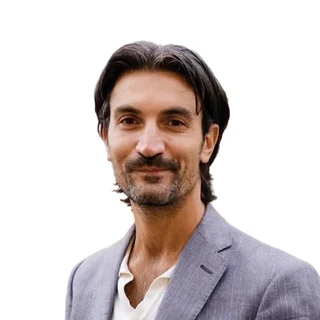
Dumitru Culiuc
Director, HORA Documentary
Founder, Image Studio · RepGet
Discover the project: HORA Official Website
Explore the film: HORA Documentary
Meet the people: The People Behind HORA